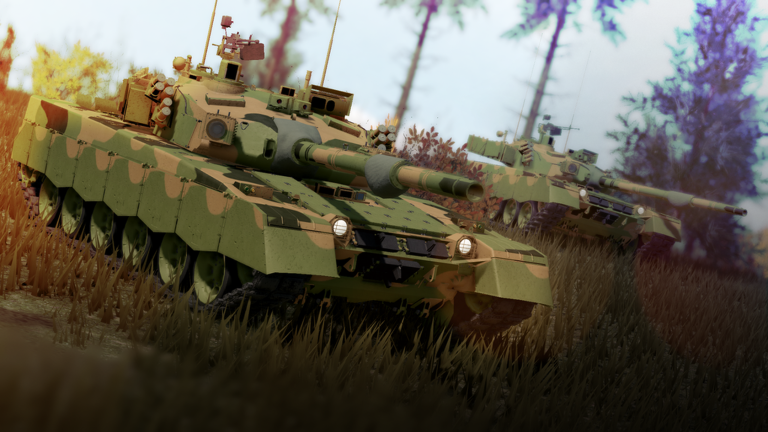
Multicrew Tank Combat puts you in command of a battlefield tank alongside your crew. Instead of flying solo, you work together with other players—each controlling a different part of the tank. It's all about teamwork: someone steers, someone aims, someone loads ammo, and someone calls the shots. Coordinate well and you'll dominate.
What Is Multicrew Tank Combat?
Multicrew Tank Combat is a multiplayer combat game where teams operate tanks as a crew. You don't control the entire tank alone—your squad splits the responsibilities. This forces real communication and strategy. One wrong move from your driver or a delayed reload from your loader costs you the match. It's not a solo shooter; it's a team effort.
Getting Started
Here's your first steps into the game:
- Launch Multicrew Tank Combat from the Roblox games list.
- You'll spawn into a lobby or map. Look for a way to join or create a crew.
- Wait for other players to join your tank, or join an existing crew.
- Once your crew is assembled, you'll be assigned or choose your role.
- The game loads you into battle—your tank and the enemy's are now active.
The matchmaking system pairs you with other players. Your first few matches will teach you the basics faster than any tutorial video.
Tank Roles Explained
Every player on the crew has a job. Here are the four main roles:
- Commander — Leads the crew and calls targets. You see the map and relay orders to the rest of the team.
- Gunner — Operates the turret and fires the main cannon. Precision aiming is your job.
- Driver — Controls the tank's movement and positioning. Speed and evasion fall on you.
- Loader — Feeds ammo into the cannon. No ammo loaded = no shots fired.
Each role matters equally. A good gunner is useless if the driver can't position the tank. A perfect aim is worthless if the loader isn't ready. Communication between all four makes the difference.
Core Gameplay Loop
Here's what a typical battle round feels like:
- Your crew spawns in the tank at your team's starting position.
- The driver moves toward enemy positions or defensive ground.
- The commander spots enemies and calls targets to the gunner.
- The gunner aims and lines up the shot.
- The loader confirms ammo is ready, and the gunner fires.
- If the shot hits, the enemy tank takes damage. Enough hits destroy it.
- The cycle repeats until your team destroys all enemies or the round time expires.
Victory goes to the team that eliminates the most enemy tanks or survives the longest. Rounds are fast—expect 5–15 minute matches depending on the map.
Working With Your Crew
Communication wins battles. Here's how to stay in sync:
- Use voice chat or in-game text to call out enemy positions. "Enemy left side, 50 meters" is more useful than staying silent.
- The driver should listen to the commander for directions and positioning.
- The gunner needs to know when the loader is ready before firing. A wasted shot hurts everyone.
- The loader should reload immediately after each shot, even if the next target isn't spotted yet.
- If your tank takes heavy damage, fall back or repair if the game allows it.
Common Beginner Mistakes
Avoid these early pitfalls:
- Ignoring your role. The driver speeding off alone while the commander is flanked doesn't work. Stay together and listen to callouts.
- Firing without ammo. Check with your loader. A click with no boom wastes your positioning and wastes time.
- Over-extending. Don't drive into the open without cover. One good enemy shot ends the round for your whole crew.
- No communication. Text or voice—something is better than silence. Even "reloading" or "moving left" helps.
- Panicking in a fight. Stay calm. A crew that talks through damage has a better shot than a crew that freezes.
Watch your first few losses as learning moments. You'll spot what went wrong—too slow rotations, missed targets, poor timing—and fix it next match.