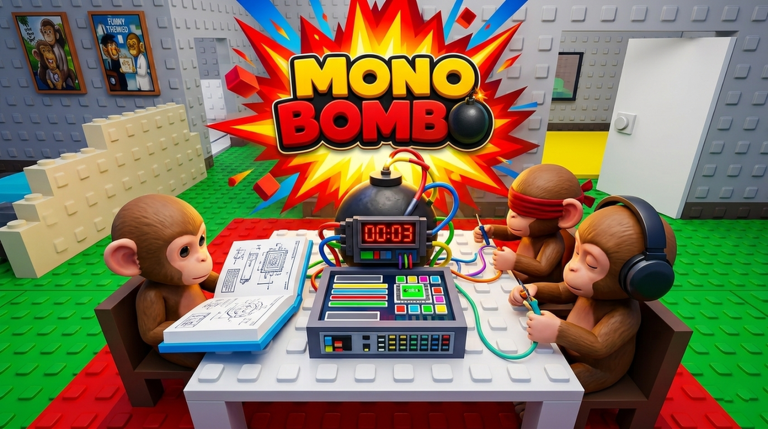
Monobombo throws you and your friends into a high-stakes team challenge: three monkeys, three different limitations, one goal. One monkey is blindfolded, one can't hear, and one won't talk. You'll need to work together across these barriers to solve the bomb-defusing puzzles ahead. Here's how to play smart from the start.
Assign Roles Before Starting
Before you hit play, talk with your teammates and decide who will take which role. Knowing who the blindfolded, deaf, and silent monkeys are ahead of time prevents confusion when the pressure's on. Each player should understand their unique limitations and what information they can or cannot access. This setup phase saves tons of panic later.
Speaking Monkey Becomes the Relay
The monkey who can talk is your team's communication hub. This player should describe what they see and hear, relaying information between the two limited monkeys. Make sure this player is clear, direct, and doesn't assume their teammates understand context. Short, specific callouts work better than long explanations.
Blind Monkey Listens Carefully
The blindfolded monkey can't see the bomb, so they depend entirely on verbal instructions from teammates. Pay close attention to every detail your talking teammate says. Ask clarifying questions if directions are vague. Being the eyes requires active listening, not passive standing around.
Deaf Monkey Watches and Reads
The monkey wearing headphones can see everything but hear nothing. This player should watch for visual patterns, symbols, or movements on the bomb interface. Use quick gestures or point to things on screen if your team develops hand signals. Your job is to catch what talking and blind teammates might miss visually.
Develop a Simple Callout System
Create a quick system for numbers, colors, or directions before the round starts. For example, agree on what "left," "right," "top," and "bottom" mean on the bomb. Use numbers 1–10 instead of spelling them out. Shorter terms mean fewer mistakes and faster teamwork.
Test Communication Early
In the first few rounds, move slowly and practice talking to each other. Don't rush. Figure out which words confuse people and which instructions land clearly. Successful bomb defusal comes after your team actually understands each other, not before.
The Silent Monkey Uses Gestures
The monkey who won't talk can't speak, but they can move. Point, nod, shake your head, or stand on certain spots to communicate non-verbally. Work with your team to assign meaning to gestures. This monkey's role is to confirm or deny using body language.
Break Down Bombs Into Steps
Don't try to defuse the whole bomb at once. Identify one puzzle or mechanism at a time. Solve that piece, confirm it worked, then move to the next. Step-by-step defusal keeps your team calm and reduces the chance of accidental explosions.
Stay Patient Under Pressure
Bombs have time limits, but rushing creates more mistakes. If someone misunderstands, pause, clarify, then continue. Frustration breaks teams faster than any ticking timer. The monkey with normal abilities should keep morale steady and encourage their limited teammates.
Learn From Failed Rounds
When you fail, replay that same bomb and try a different approach. Did someone misunderstand a direction? Use different words next time. Did the blind monkey miss a step? Have the deaf monkey confirm visually. Every explosion teaches you what doesn't work.